Illustrative example
80 Before→100 After
What is the percentage increase?
The strengths-based format branded in the employer’s own identity, the numerical, verbal, critical reasoning and situational strengths questions inside it, the three answer formats, and how to prepare for the activities named in your invitation.






A Cappfinity assessment is an online assessment covering reasoning, strengths and work-related behaviour. Its range includes numerical, verbal and critical reasoning, situational strengths and job simulations. The employer selects the assessment mix; read each activity’s instructions for its response format and timing.
Which Cappfinity test you sit depends on the employer and the role: an entry-level position will not be given the same assessment as a graduate or managerial one.
Four things to know before you sit one. Timings and difficulty vary with the level of the role.
Match the name in your invitation to the assessment below. Timings marked “approx.” are completion estimates; other published durations are limits for the named version.
| Assessment | What it measures | Questions | Timing |
|---|---|---|---|
| Numerical reasoning | Tables and charts, often across several tabs; multiple choice, ranked and free-form answers | Set by employer | See activity instructions |
| Verbal reasoning | True, false or cannot say, fill-the-gap and ranking from company reports and emails | Set by employer | See activity instructions |
| Critical reasoning | Assumptions, arguments, inferences and conclusions from a passage | Set by employer | See activity instructions |
| Situational strengths | Drag the responses to a scenario into rank order; some scenarios asked twice | Set by employer | Untimed |
| Job simulation | An immersive day in the role, with the questions above inside it | Set by employer | See activity instructions |
Counts and timings vary by role level and by the version an employer licences. Check the instructions on the screen before you start. Facts checked 11 September 2026.
Cappfinity assessments are configured for the employer. The preparation hub does not publish one question count or overall allowance for every sitting; use your invitation and the instructions for each activity.
A visual guide to the skills and response formats covered on this page. Your invitation tells you which assessments to prepare for.
Illustrations by Practice Aptitude Tests · not official test screenshots
What is the percentage increase?
“A delivery arrives at 2 pm.”
Consider the response
If you know which company invited you, start there: the employer guide tells you which Cappfinity assessment sits at which stage of that firm's process.
Not listed? Browse all employer guides.
These results come from our own practice test in a format covered on this page. They are not official Cappfinity results, a benchmark for our entire Cappfinity practice pack, or an employer pass mark.
Results from our numerical reasoning test.
Source: Practice Aptitude Tests
Based on 1280 completed practice sittings, all time. Checked 14 September 2026.
The 75th percentile marks the boundary of the top quarter of recorded scores; tied scores can share that boundary. These are our practice results, not employer pass marks.
We use all-time completed, scored attempts at this practice test. Repeat attempts count separately, so the sample is sittings rather than unique people.
The average is the mean score across those sittings. The 75th percentile comes from their recorded score distribution. The “checked” date is when we retrieved the figures, not the period when the tests were taken.
Sharing these figures? Please credit Practice Aptitude Tests and link to this page.
One question tells you the style. A pack gives you the pace: timed and marked, with the working shown.
As with any numerical reasoning test, the Cappfinity version measures how you interpret and draw conclusions from data in tables and graphs. The data often sits across several tabs or documents, so part of the work is pulling the right figures together before you calculate. Three answer formats appear: multiple choice, ranked questions where you order several items, and free-form questions where you type the result of a calculation. A calculator is usually allowed; HSBC tells candidates to have one to hand with pen and paper.
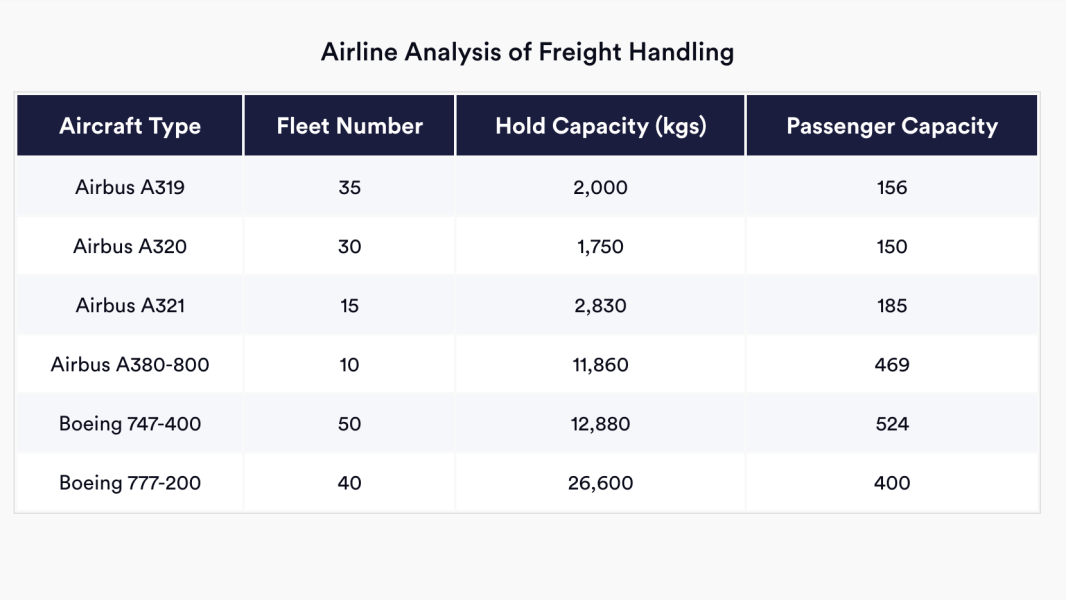
An Airbus A321 takes off full. If the average bag weighs 12kgs, how many bags are there on the plane per passenger?
The answer is number 4. The total number of bags is 2,830kg / 12kg = 235.8
The average number of bags per passenger is 235.8 / 185 = 1.27
Standard verbal reasoning questions, true, false or cannot say against a passage, sit alongside fill-the-gap questions completed from a drop-down and ranked questions where you order statements. At some employers the section shades into critical reasoning, with items on assumptions, conclusions and the strength of an argument. The material comes from the same storyline as everything else: company reports, articles and internal emails rather than abstract passages.
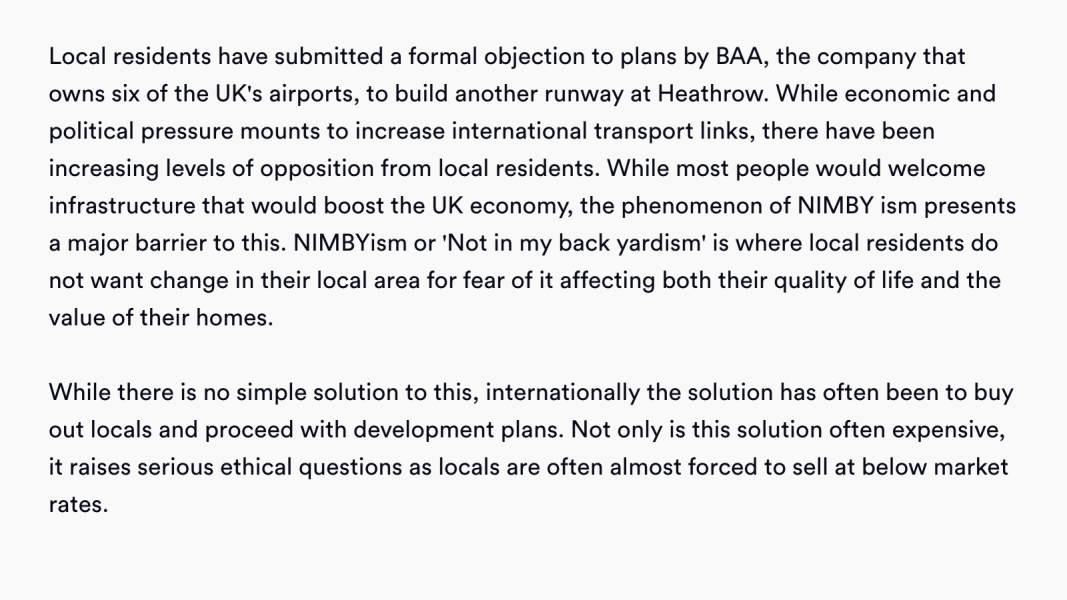
Statement: Local Heathrow residents are refusing to use the sixth runway if it is built.
The answer is cannot tell. The passage does not give a number for the proposed new runway, and nor does it say whether local protesters would refuse to use it should it be built.
Multiple-choice items on a passage that score critical thinking: recognising assumptions, evaluating arguments, interpreting written information, drawing logical conclusions and judging inferences.
Situational strengths tests show you a work scenario and a set of possible actions. Rather than picking the single best one, you drag them into rank order from what you would most likely do to what you would least likely do. Each employer’s scenarios are built around its own competencies and values, so the storyline changes even though the structure does not. Some scenarios are asked twice, once for what you would do and once for what you would enjoy, because the model treats a strength as something you are good at and find energising. The worked example below uses the simpler most-and-least pairing.
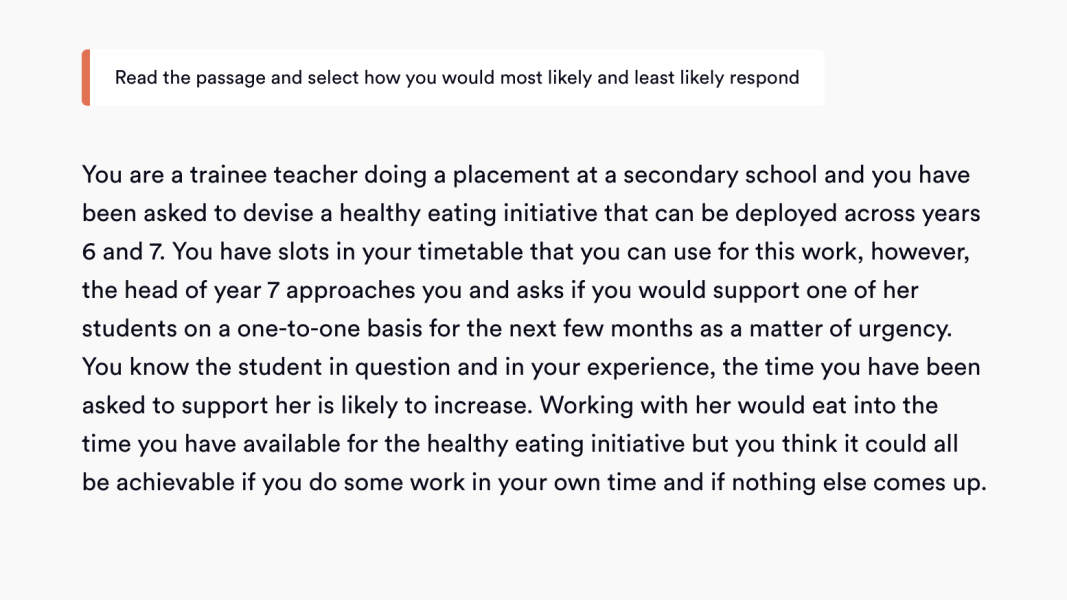
Read the passage below and select how you would most likely and least likely respond.
The best answer for most likely is 2. Tell the head of year 7 that you would love to work with this student on a one-to-one basis and look for other opportunities to work on the healthy eating initiative.
The best answer for least likely is 4. The head of year 7 has asked you specifically to support this student, which means she believes you could do a good job. On a placement it is wise to grasp every opportunity you can, and declining to go the extra mile makes it less likely you will be asked again. It may feel helpful to offer to find someone else, but the head of year 7 is more than capable of doing that herself.
What candidates ask us most often
Follow the scoring and timing instructions for the activity you have been given. Cappfinity provides different reasoning and behavioural assessments, so a rule about speed in one format should not be assumed to apply to the whole sitting.
The assessment mix is chosen by the employer. Your invitation and the instructions for each activity give the relevant timing guidance; there is no single duration for every Cappfinity assessment.
Because the model treats a strength as something you are both good at and find energising. A scenario may be asked once for what you would actually do and once for what you would most enjoy doing. Answer both honestly rather than trying to make them match; Deloitte’s own guidance is to go with your gut rather than second-guess the employer.
Cappfinity tests are online assessments, taken remotely in the candidate’s home or location of choice, and they are designed to be completed in one sitting. Employers that use them typically advise setting aside an uninterrupted block of time, with a calculator and paper to hand.
Rated 4.8 out of 5 across 16 reviews. A selection:
Well structured wording mostly clear, would have been good to know from the start that the graphs are interactive
Lots of reading of data off graphs and charts. Numbers too large for a basic calculation and answers from previous questions may be relevant. Easier to use Excel to keep track.
It was my first time completing a numerical test under pressure - good for practice. However some of the diagrams did take a bit longer to understand
Cappfinity is a trademark of its respective owner. Practice Aptitude Tests is not affiliated with Cappfinity and our practice tests are not endorsed by them.
Take a free test in any format, then upgrade when you know which one you need.