Illustrative example
80 Before→100 After
What is the percentage increase?
Numerical practice
Build data-interpretation skills for the reasoning format named in your current invitation.
View guidanceThe legacy Kenexa reasoning and Prove It! skills formats, SHL’s transition route for Kenexa clients, and how to identify the assessment in your current invitation. Worked examples show the numerical, verbal and logical skills to practise.






Kenexa is a legacy name for recruitment reasoning and job-skills assessments, including Prove It! tests. SHL and IBM announced a transition route for Kenexa assessment clients. An invitation may therefore use a newer provider or product name; confirm that name and its instructions before relying on older Kenexa question counts or timings.
Which Kenexa test you sit depends on the employer and the role: an entry-level position will not be given the same assessment as a graduate or managerial one.
Four things to know before you sit one. Timings and difficulty vary with the level of the role.
Match the name in your invitation to the assessment below. Timings marked “approx.” are completion estimates; other published durations are limits for the named version.
| Assessment | What it measures | Questions | Timing |
|---|---|---|---|
| Kenexa numerical reasoning | Data interpretation, percentages and business finance from charts and tables | Check named version | See invitation |
| Kenexa verbal reasoning | Dense passages, then true, false or cannot say | Check named version | See invitation |
| Kenexa logical reasoning | The rule connecting shapes and patterns, to complete a sequence | Check named version | See invitation |
| Kenexa CAT | Numerical, verbal and logical questions combined; adaptive | Check named version | See invitation |
| Prove It! | Software, typing, accounting and other job skills; content depends on the named test | Check named version | See invitation |
| Career, culture and job fit | Competencies, values and traits against the role and company | Check named version | See invitation |
Counts and timings vary by role level and by the version an employer licences. Check the instructions on the screen before you start. Facts checked 11 September 2026.
Kenexa is a legacy name. SHL provides a transition route for IBM Kenexa assessment clients. Older Kenexa counts should not be assumed to describe the assessment in a current invitation.
A visual guide to the skills and response formats covered on this page. Your invitation tells you which assessments to prepare for.
Illustrations by Practice Aptitude Tests · not official test screenshots
What is the percentage increase?
Build data-interpretation skills for the reasoning format named in your current invitation.
View guidance“A delivery arrives at 2 pm.”
Find the difference
The last two digits have swapped.
Skills tests vary by role and software; check the named version before preparing.
View guidanceThese results come from our own practice test in a format covered on this page. They are not official Kenexa results, a benchmark for our entire Kenexa practice pack, or an employer pass mark.
Results from our numerical reasoning test.
Source: Practice Aptitude Tests
Based on 1280 completed practice sittings, all time. Checked 14 September 2026.
The 75th percentile marks the boundary of the top quarter of recorded scores; tied scores can share that boundary. These are our practice results, not employer pass marks.
We use all-time completed, scored attempts at this practice test. Repeat attempts count separately, so the sample is sittings rather than unique people.
The average is the mean score across those sittings. The 75th percentile comes from their recorded score distribution. The “checked” date is when we retrieved the figures, not the period when the tests were taken.
Sharing these figures? Please credit Practice Aptitude Tests and link to this page.
One question tells you the style. A pack gives you the pace: See invitation a question, marked, with the working shown.
Besides the reasoning tests below, the Kenexa range covers career fit (a competency test of your strengths and how you would develop in the role), culture fit (how your values match the company’s), job fit, the Kenexa performance indicators and the Prove It! skills platform. The three timed reasoning tests are the ones most candidates sit, and the historically described Kenexa CAT combines all three in an adaptive sitting.
Older Kenexa numerical formats should not be assumed to describe a current invitation. Check the specified count and timing before practising. You will need to interpret data, calculate percentages and handle business finance figures, which is what timed numerical reasoning practice trains.
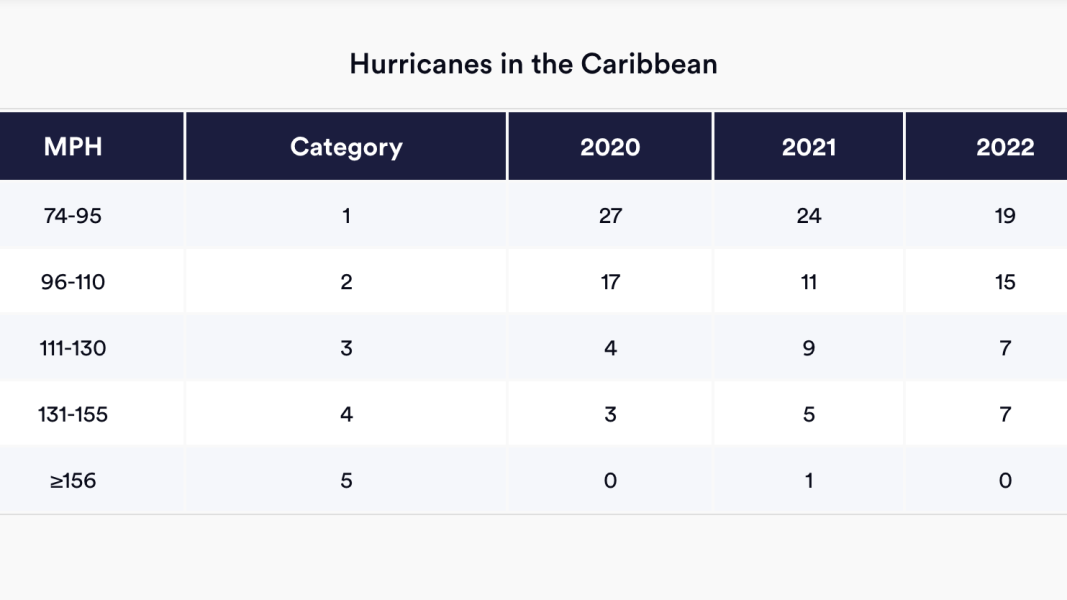
What was the percentage change in category 3 hurricanes from 2021 to 2022?
The answer is B. In 2021 there were 9 category 3 hurricanes, and in 2022 there were 7. Percentage change: (7-9) / 9 x 100 = -22.22%
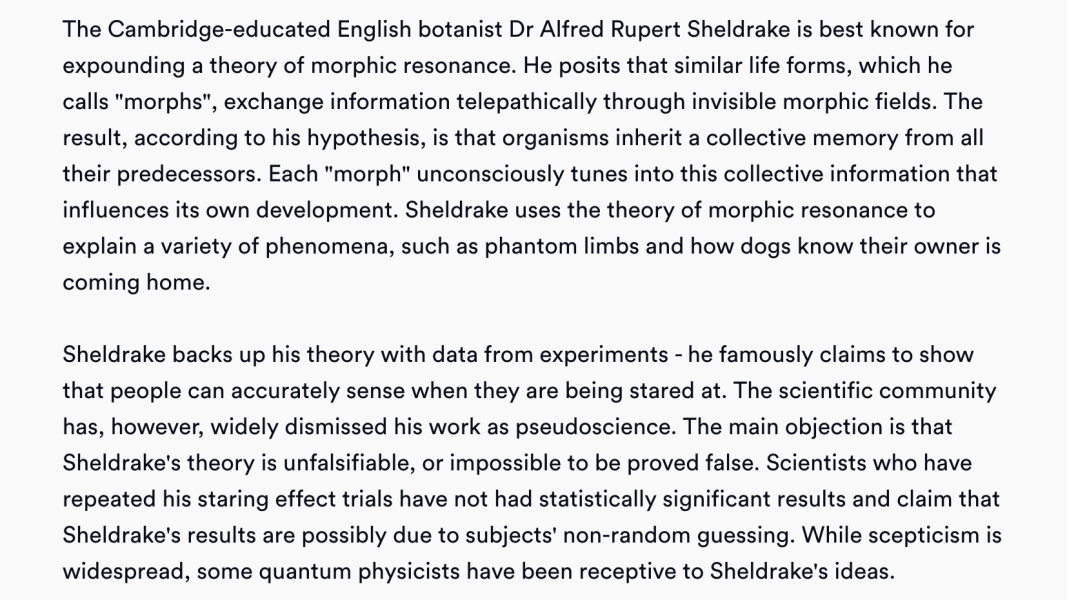
The verbal reasoning test uses passages of text; check your invitation for the current question count and time limit. No prior knowledge is needed; you separate fact from inference in what you have read and answer true, false or cannot say.
Statement: The theory of morphic resonance centres on the idea that the memories of one generation are mysteriously passed to the next.
The correct answer is True. This paraphrases the explanation given in the first paragraph.
The logical reasoning test presents shapes, patterns or images and asks you to work out the rule that connects them and complete the sequence from multiple-choice options, against the clock.
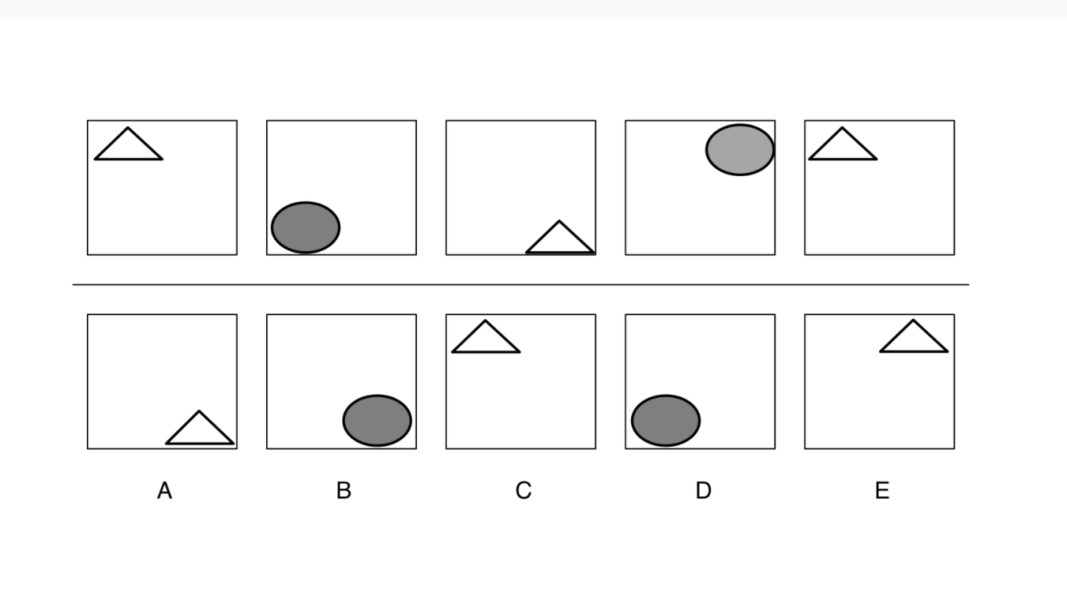
Which of the boxes comes next in the sequence?
The correct answer is D. Rule 1: The shapes move one corner in an anticlockwise direction each time. Rule 2: The shapes alternates between triangle and circles.
What candidates ask us most often
Yes. IBM sold the suite to Infinite Computer Solutions in 2021 and it now runs as Infinite Talent, but the classic reasoning tests are still set by employers using the BrassRing recruitment system. An invitation that says IBM Kenexa, Kenexa or Infinite Talent means the format described here.
A skills test rather than a reasoning test. The Prove It! platform holds over 1,200 tests of specific job skills, from software packages and typing speed to accounting tasks, and an employer picks the ones the role needs. Practise the actual skill; there is no reasoning technique to learn.
Check your invitation for the named assessment, question count and time limit. A figure quoted for an older or different version may not apply to your sitting.
CAT means computer-adaptive testing. If this appears in your invitation, confirm the current provider and assessment name rather than relying on a legacy Kenexa specification.
Rated 4.7 out of 5 across 23 reviews. A selection:
It was helpful getting a sense of what questions I might encounter when I take the actual test next week.
I liked that the graphics were clearly displayed and hyperlinked for details. I disliked that the questions often built on each other without letting the test taker know that they could return to the previous question for reference. Very stressful! I realized it too late.
I liked the variety of questions. I disliked in the first question that I had to move my pointer on top of the graph to identify the values. At first, I did not notice this quality. It would be easier to have the numbers printed next to the lines.
Kenexa is a trademark of its respective owner. Practice Aptitude Tests is not affiliated with Kenexa and our practice tests are not endorsed by them.
Take a free test in any format, then upgrade when you know which one you need.