

Easy to complete
I liked that the passages were not filled with an excessive amount of information/writing, making it easier to focus and answer the given questions. I dislike that you are not notified when the passage changes.
Short passages with true, false or cannot say statements, at the foundation level employers use for volume hiring. Every question below comes with the answer explained.
Free · No sign-up · Scored the moment you finish






A basic comprehension test measures how well you understand written information and answer questions on it. Employers use it to check you can read instructions and passages accurately before interview. You read a short piece of text and answer questions on its meaning, detail and purpose, choosing the best answer from the options given. It rewards careful reading over speed alone.
Start the free test. It opens full screen, without leaving this page.
| Score | What it suggests |
|---|---|
| 9 to 10 | Comfortably above the bar for most graduate schemes |
| 7 to 8 | Around the typical pass mark. Worth practising for speed |
| 5 to 6 | Below most employer thresholds. Focus on method before speed |
| 4 or fewer | Work through the worked solutions above before retrying |
Employers set their own thresholds and many sift on the top percentage of applicants rather than a fixed mark, so treat these as a guide.
One test tells you the style. A pack gives you the pace: batches under time pressure, marked, with the working shown.
A basic comprehension test is a foundation-level verbal reasoning test that checks how well you understand written English. You are given a passage of information and asked to read it, weigh a set of possible answers and choose the most suitable one.
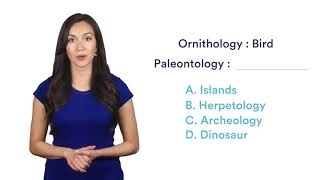
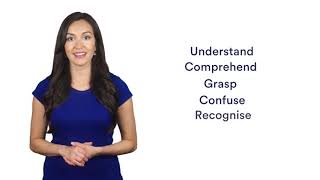
It sits at secondary school level, around age sixteen, and the questions draw on everyday language skills: vocabulary, spelling, word association, idioms and metaphors, and sometimes sentence structure and grammar. The aim is to confirm you can take meaning from text accurately, which almost every job relies on.
Like the numeracy version, it is timed. You typically get between 45 seconds and two minutes per question, so reading efficiently matters as much as reading correctly.
Basic comprehension tests assess your ability to understand and interpret written information, broken down into a handful of distinct skills. Knowing which one a question is testing helps you answer it.
These are the same skills good written communication relies on, which is why employers across many roles use the test.
A basic comprehension test gives you a passage followed by questions with multiple-choice answers, and asks you to answer from the passage alone. Foundation comprehension also appears inside well-known admissions and psychometric tests, such as the GRE and the ieGAT, so the format is widely used.
The English required is secondary school level. Within that, questions may ask you to:
Questions on idioms, metaphors and word association also appear, testing whether you understand language that is not entirely literal.
Answer from the passage, not from what you already know, because outside knowledge is the most common way to talk yourself into a wrong option. Every correct answer can be backed up by something the text actually says.
A method that holds up under time pressure:
Scan the whole test before you start, so you know how many passages and questions you face and can plan your time across them. Comprehension tests are timed, and spending too long on one passage is what leaves people with unanswered questions at the end.
Two habits help most:
Most employers score you against other candidates, not against a fixed pass mark: your raw score becomes a percentile. Competitive graduate schemes commonly sift at around the 70th to 80th percentile. Attempting questions matters, because most tests are built so few candidates finish, and guessing usually pays: negative marking is rare, but check the instructions.
Basic comprehension tests are used wherever a role depends on reading and understanding written information accurately, which covers a wide range of operational, customer service, administration, help desk and commercial jobs. They are one of the most widespread early-stage selection tools.
Most employers license their tests from a small number of publishers, and the timing and question style vary between them, so find out which publisher your employer uses before you prepare seriously. It is usually named in the invitation email. Our test publisher guides cover each format, and the employer guides cover specific companies’ processes.
The methods behind the questions above, from our team
What candidates ask us most often
It is a foundation-level form of one. A basic comprehension test checks everyday reading and vocabulary at around age-sixteen level, while a full verbal reasoning test is often pitched higher and used later in graduate recruitment. The skills and the approach are the same.
It varies by employer, but most are tightly timed with roughly 45 seconds to two minutes per question. The number of passages and questions differs between tests, so scan the whole paper first and check your invitation email for the length.
No. These tests assess your own vocabulary and reading, so outside aids are not allowed, and unsupervised online tests rely on your honesty. Building vocabulary through reading and practice is the way to improve, not looking words up on the day.
No, and using it is a common mistake. Every answer should be supported by the passage itself, so base your choice on what the text says rather than what you happen to know about the topic. If you cannot point to the words that back an option, reconsider it.
Practise under the real time limit from the start, and review every answer you got wrong; untimed work builds accuracy but not the speed the test measures.
Rated 4.8 out of 5 across 224 reviews. A selection:
I liked that the passages were not filled with an excessive amount of information/writing, making it easier to focus and answer the given questions. I dislike that you are not notified when the passage changes.
The layout of the site is good because you can view the timer simultaneously as you're answering the test.
I liked how the different sets of questions were laid out and it was a good practice for an upcoming English exam.
Take a free test in any format, then upgrade when you know which one you need.