What you get with our logical reasoning practice tests
When you practise with Practice Aptitude Tests, you get access to:
- Realistic test questions modelled on the formats used in actual job assessments
- Progressive difficulty levels to build confidence and competence over time
- Detailed answer explanations that help you learn from every question
- Timed test simulations to replicate real assessment conditions
- Performance feedback and score breakdowns to track strengths and weaknesses
- Unlimited practice so you can master patterns and reasoning logic
- Question review mode for focused learning on tricky areas
- Accessible on desktop and mobile devices so you can practice anywhere
- Tips and strategies to improve reasoning speed and accuracy
Is this logical reasoning test practice right for you?
Our logical reasoning tests are suitable for candidates at all stages of their careers. You’ll benefit most if you are:
- Applying for graduate schemes or internships
- Sitting assessments from SHL, AON, Saville, Talent Q, or Kenexa
- Retaking an aptitude test after not passing a previous stage
- Looking to improve speed and accuracy under timed conditions
- Preparing for consulting, finance, law or professional services roles
If logical reasoning forms part of your recruitment process, practising realistic tests can significantly improve your performance and confidence.
Try a free logical reasoning test now
What is a logical reasoning test?
A logical reasoning test is an assessment used by employers to evaluate how effectively you interpret information, apply logic to solve problems and draw relevant conclusions. It is typically non-verbal and in a multiple-choice format, and requires the use of rules and deduction to reach answers, rather than prior knowledge.
That said, logical reasoning is actually an umbrella term for multiple types of assessment, and you may find you’re asked to take any one of the following five test types as part of a job application.
Deductive reasoning
Commonly presented as a series of word problems, deductive reasoning tests require you to apply top-down-logic; that is, you must draw the right conclusion from a set of given premises.
Inductive reasoning
Unlike deductive reasoning, inductive reasoning tests ask you to make general inferences – probable conclusions based on a set of information, rather than unquestionable outcomes.
This is most often done through the use of shapes, patterns, sequences and diagrams.
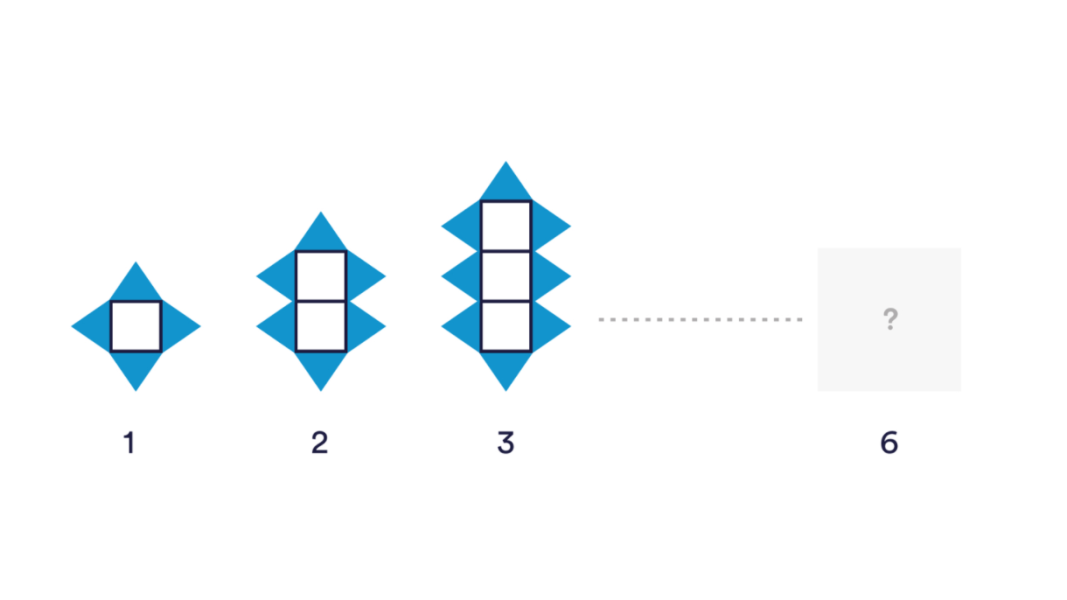
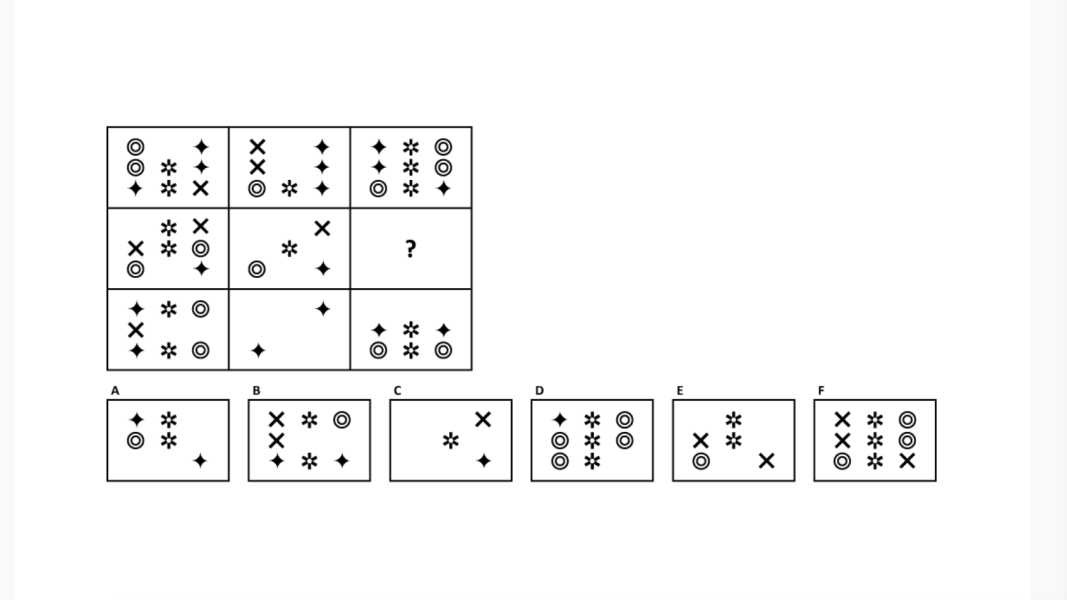
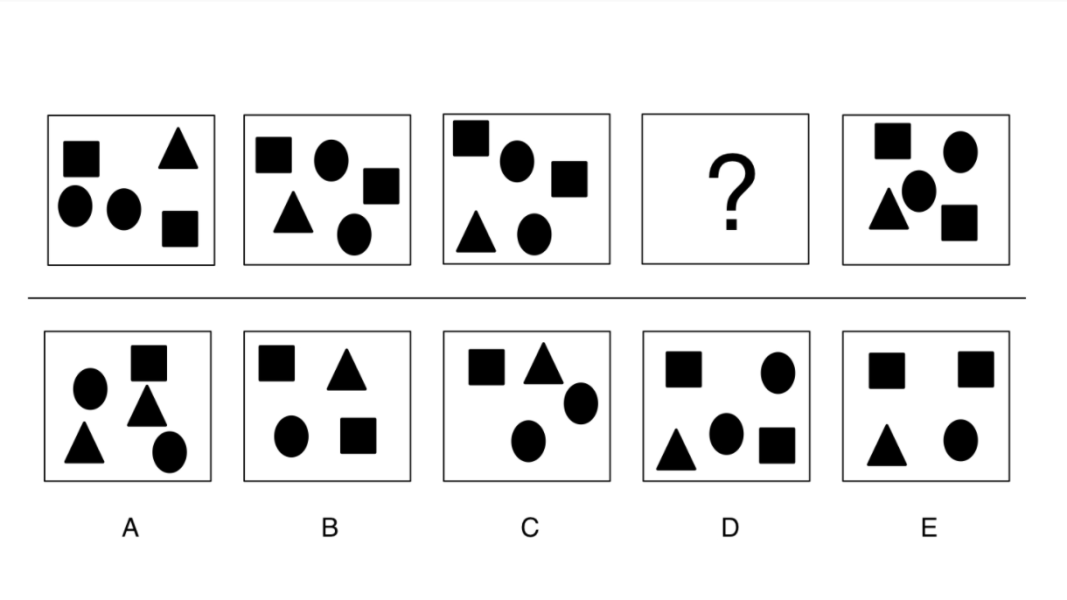
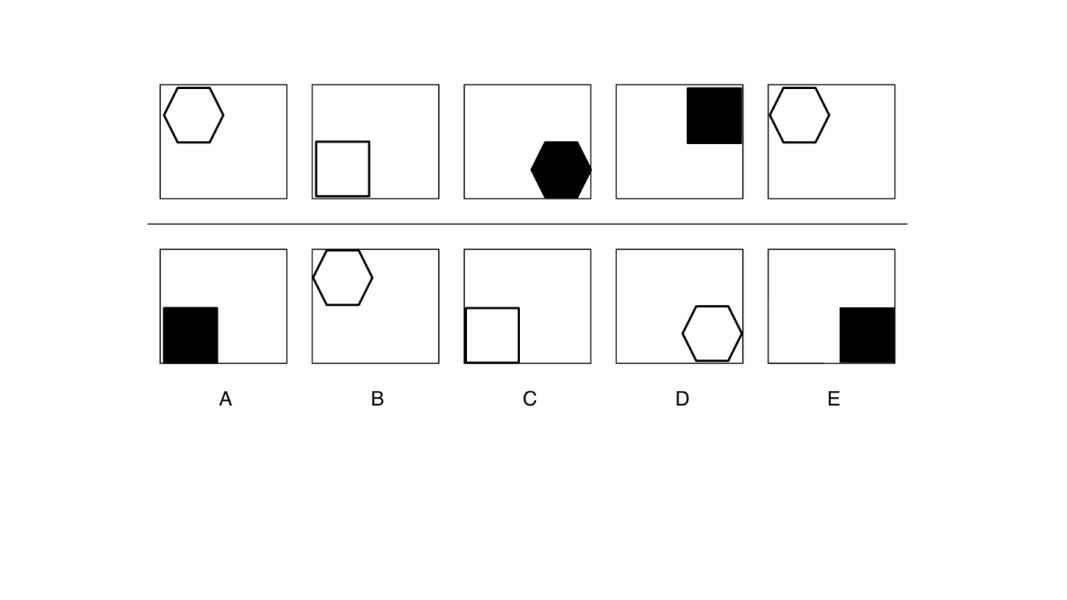
You’ll need to quickly identify relationships and rules, then apply these to find the most logical answer from the multiple-choice options. This could be identifying the odd one out, filling in the missing part of a pattern, or finding the next part of a sequence.
Diagrammatic reasoning
Similar to inductive reasoning, diagrammatic reasoning tests offer visual representations of a problem and require you to make logical connections to draw a conclusion.
Questions often take the form of a diagram with inputs and outputs, and you’ll be required to select which processes from a list of operators would achieve the documented effect.
Abstract reasoning
Abstract reasoning tests are essentially inductive and/or diagrammatic reasoning tests under another name.
They too require you to find relationships and rules between visual sequences, then apply these to select the correct image from multiple options, be it a missing part or a continuation of the sequence in question.
Critical reasoning
Critical reasoning tests are more akin to deductive reasoning tests, in that you’ll be dealing with word-based scenarios, arguments, evidence and conclusions.
These tests tend to evaluate a range of skills. Argument analysis is common, in which a question is posed, and a yes/no answer given with a supporting statement. You’ll need to decide whether the statement is a strong or weak argument.
How our logical reasoning tests prepare you better
Many free logical reasoning tests only offer a handful of questions and limited feedback. Our practice tests are built to reflect the structure, difficulty, and time pressure of real employer assessments.
With Practice Aptitude Tests, you get:
- Employer-style questions across all logical reasoning types
- Timed tests that replicate real assessment conditions
- Full answer explanations so you understand why an option is correct
- Multiple difficulty levels to match graduate and professional roles
- Unlimited practice to track progress and improve weaker areas
Access logical reasoning tests
Why do employers use logical reasoning tests?
As with any form of psychometric assessment, employers use logical reasoning tests as a way to filter applicants, most commonly in the pre-interview stages of selection.
Logic forms a fundamental part of day-to-day decision making. Our reasoning capabilities determine how effectively we interpret the world around us, and how we use what we know to be fact to inform our choices. As such, logical reasoning is a vital part of many job functions.
In administering a logical reasoning test, employers are evaluating how well you’re likely to perform tasks like strategy development, risk assessment and forecasting, as well as general problem solving.
Additionally, the ability to quickly discern patterns, understand complex relationships, and make logical deductions underpins successful innovation and creative problem-solving in dynamic work environments. Thus, logical reasoning tests also serve as a method for assessing a candidate’s potential to contribute to innovative solutions and strategic thinking in their prospective role.
Common logical reasoning test publishers
Logical reasoning tests are designed to assess a candidate’s ability to interpret patterns, sequences, and logical structures. These tests often include both inductive and deductive elements and are widely used in recruitment for analytical or decision-making roles.
The most used test providers include:
-
SHL: SHL offers both inductive and deductive reasoning tests, tailored to different job levels. Tests typically last up to 25 minutes and follow a consistent multiple-choice format focused on logic-based problem solving.
-
Kenexa: Kenexa’s logical reasoning assessments emphasize abstract pattern recognition and sequence-based problem solving. Their verbal reasoning test is often considered a deductive reasoning assessment in business contexts.
-
AON (Cut-e): AON offers a range of logic-based tests, including variations of both inductive and deductive reasoning. Their unique interface and timed micro-assessments make their format quite distinct, so focused preparation is key.
-
Saville Assessment: Saville includes logical reasoning elements in both its abstract reasoning and diagrammatic reasoning formats. These are timed tests (typically 20–25 minutes) and are frequently used for graduate and managerial roles.
-
Talent Q: Talent Q’s logical reasoning tests are adaptive – questions get harder or easier based on how you perform. They focus on identifying patterns in shapes, symbols, or sequences and often include more answer options than traditional tests.
What you’ll improve with our logical reasoning tests
Practising logical reasoning tests helps you develop the skills whilst learning the question types.
By using our logical reasoning practice tests, you’ll improve your ability to:
- Spot patterns and relationships more quickly
- Apply logical rules consistently under time pressure
- Avoid common traps used in aptitude assessments
- Balance speed and accuracy across longer tests
- Approach unfamiliar problems with confidence
These improvements can make the difference between progressing to interview and being screened out early.
Start practising today