What does an inductive reasoning test measure?
An inductive reasoning test measures how well you spot the underlying rule in
a set of shapes or figures and apply it to find the answer. It is a test of
fluid intelligence: reasoning with unfamiliar information rather than recalling
anything learned. There is no maths, no language and no subject knowledge, so
prior study gives no advantage and candidates from any background start level.
The patterns you have to find usually involve alternation, rotation,
reflection, replacement or translation, or a combination of these. Employers
value the test because it reveals how you think when you meet something new:
how you approach an unfamiliar rule, and how creatively and quickly you work it
out. That predicts on-the-job performance, whether the new thing is an
unfamiliar dataset, a novel technical fault or a market you have never worked
in.
It is one of the most common screening tools in graduate and professional
recruitment, and almost every question is multiple choice under a tight clock.
What types of question appear in an inductive reasoning test?
Inductive reasoning tests use a small set of recognisable formats, and knowing
them in advance means you spend your time solving rather than decoding the
question.
- Shape sequences. A horizontal row of figures changes step by step and you
choose the one that comes next. This is the most common format.
- Matrices. A grid of shapes has one cell missing and you pick the shape
that completes it, reading the rule across the rows and down the columns.
- A/B sets. Two sets each follow their own rule, and you decide which set a
new figure belongs to by identifying the feature that defines each.
- Odd one out. You select the figure that breaks the rule the others share.
All four rest on the same skill of isolating a rule from examples. Once you can
name the pattern types, the particular format matters far less.
What are the common pattern rules in inductive tests?
Almost every inductive question is built from a short list of pattern rules, and
learning them turns the test from guesswork into recognition.
- Alternation: a feature switches on and off, or between two states, on a
regular cycle.
- Rotation: a shape turns by a fixed angle each step.
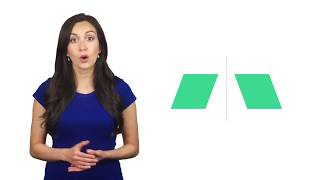
- Reflection: a shape flips to its mirror image, which rotation alone cannot
reproduce.
- Replacement: one element is substituted for another according to a rule.
- Translation: an element moves a set distance or around the figure on a
fixed path.
- Combination: two or more of the above run at once, which is what makes
harder questions harder.
The reason to memorise this list is speed. Instead of staring at a figure hoping
the rule jumps out, you check each element against the list, which is faster and
far more reliable under time pressure.
How do you find the rule in a shape sequence systematically?
Track one element at a time across every frame rather than trying to read the
whole figure at once. A sequence that looks complicated is usually two or three
simple rules running independently, and reading them together is where most
people go wrong.
A reliable method:
- Pick one element and follow only it across the frames. Does it rotate,
move, change size, change shading, or appear on a cycle?
- Repeat for each remaining element, treating every one as its own separate
rule.
- Note what stays constant, since an unchanging feature still rules options
in or out.
- Apply every rule to predict the next figure, then find it in the options.
Predicting first stops a plausible distractor talking you into the wrong
answer.
Because inductive answers are the most probable conclusion rather than a certain
one, you are choosing the option that best fits the pattern, not proving a single
truth. Pick the answer that satisfies every rule you have found.
How do you solve odd-one-out and A/B set questions?
Find the single feature that the group shares, then the odd one out is whichever
figure lacks it, and a set question is answered by whichever set’s feature the
new figure matches. The defining feature is usually simpler than the figures make
it look, because size, colour and position are often deliberate decoys.
For an odd one out, test a candidate rule against every figure: if all but one
have a single line of symmetry, the one that does not is your answer. For A/B
sets, work out the feature that every member of Set A shares and the different
feature that defines Set B, then check the new figure against both. If it matches
Set A’s feature it is Set A; if it matches Set B’s it is Set B; if it matches
neither, that is the answer.
Always confirm your rule against the whole group before trusting it. A rule that
fits most but not all of the figures is the wrong rule, not a near miss.
Inductive, abstract and diagrammatic reasoning: what is the difference?
The three terms are often used interchangeably, but there are subtle
differences worth knowing so you are not thrown by the label on your invitation.
- Inductive reasoning focuses on identifying rules within sequences of shapes
or figures.
- Abstract reasoning follows a very similar format but may place more emphasis
on pattern recognition across a grid or matrix.
- Diagrammatic reasoning typically involves applying logical rules to
diagrams such as flowcharts or process maps, rather than pure shape sequences.
In practice the skills overlap almost completely, so preparing on one prepares you
for the others. If your invitation does not specify the format, check which
publisher the employer uses, since that tells you what to expect. Our non-verbal
reasoning page covers all three types together.
How are inductive reasoning tests scored?
Your raw score, the number of questions you get right, is converted into a
percentile by comparing it against a norm group of candidates who have taken the
same test. Most employers do not publish a fixed pass mark; instead they set a
percentile threshold that reflects the role and the number of applicants.
As a rough guide, competitive graduate schemes and entry-level roles at large
employers typically expect a score at or above the 50th percentile, while more
selective roles in consulting, finance and engineering often look for something
closer to the 65th to 80th percentile. Because the tests are timed so that few
candidates finish, speed and accuracy count together, and practising under real
time limits is the most reliable way to lift your percentile before test day.
Which employers and publishers use inductive reasoning tests?
Inductive reasoning tests are among the most widely used assessments in graduate
and professional recruitment, especially at large employers with structured
schemes. Those that routinely use them include:
- Major consulting firms such as McKinsey, BCG, Deloitte and Accenture
- Investment banks and financial services firms such as Goldman Sachs, J.P.
Morgan and HSBC
- Engineering and technology companies such as Rolls-Royce, BAE Systems, BT and
IBM
- Fast-moving consumer goods businesses such as Unilever, P&G and L’Oréal
- Public sector programmes including the Civil Service Fast Stream and the NHS
Graduate Management Training Scheme
Most license their tests from a small number of publishers, and the format varies
enough that identifying yours changes how you should practise:
| Publisher |
Format |
Questions |
Time |
| SHL |
Five-figure sequences, multiple choice |
~24 |
25 min |
| AON (Cut-e) |
Odd one out from a nine-object set |
20 |
5 min |
| Kenexa |
Five-figure sequences, multiple choice |
25 |
20 min |
| Saville Assessment |
Shape sequence completion |
Varies |
Varies |
| Talent Q |
Adaptive symbol sequences, up to 14 options |
Adaptive |
Adaptive |
Your invitation email usually names the publisher. If it does not, the recruiter
will normally confirm the format if you ask.
What is the best way to prepare for an inductive reasoning test?
Practise under the real time limit and review not just whether each answer was
right but why the correct pattern holds. Structured, timed practice with worked
solutions is the single most effective way to lift your score, because inductive
ability responds directly to targeted practice in a way much of a job application
does not.
A sequence that works:
- Learn the pattern types, rotation, reflection, alternation, progression
and combination rules, so you scan each question systematically rather than
relying on intuition.
- Take one test slowly, reading every worked solution, before you add the
clock.
- Then work against the time limit and expect your score to dip at first.
- Review your mistakes and your guesses, since a lucky guess is a gap you
have not found. Once you know your publisher, rehearse its exact format.