


Analytical Reasoning Test1
l liked this test. The questions were clear and relevant. i enjoyed the question challenges.The time limit was a bit tough but it helped me stay foused.Overall, it was a great learning experince.
Written scenarios, patterns, data and constraint puzzles, in the formats employers actually set. Every question below comes with a worked solution.
Free · No sign-up · Scored the moment you finish






An analytical reasoning test measures how well you break down information and reason from a set of rules or conditions. Employers use it to sift applicants for problem-solving roles before interview. You are given facts, constraints or a scenario and asked to work out what follows, choosing the best answer from the options provided. It rewards structured thinking and careful attention to the conditions you are given.
Start the free test. It opens full screen, without leaving this page.
| Score | What it suggests |
|---|---|
| 9 to 10 | Comfortably above the bar for most graduate schemes |
| 7 to 8 | Around the typical pass mark. Worth practising for speed |
| 5 to 6 | Below most employer thresholds. Focus on method before speed |
| 4 or fewer | Work through the worked solutions above before retrying |
Employers set their own thresholds and many sift on the top percentage of applicants rather than a fixed mark, so treat these as a guide.
One test tells you the style. A pack gives you the pace: batches under time pressure, marked, with the working shown.
The styles share one demand: reason only from what you are given. Each guide below covers one.
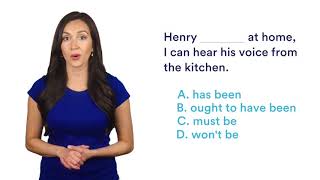
Written scenarios and statements: what follows, what contradicts, what cannot be concluded.
How verbal questions workPatterns, sequences and small data sets: find the rule and apply it.
How non-verbal questions workSeating plans, schedules and orderings: fix what is certain first, then test the options.
How constraint questions workA deduction must be true; an inference is merely likely. The options are built to blur them.
How to tell them apartAn analytical reasoning test measures how well you take a body of information apart, apply logic to it and reach a sound conclusion under time pressure. It is less about a single skill than about a way of thinking: reading a problem carefully, separating what matters from what does not, and building an answer you can defend.
Because that way of thinking is useful almost everywhere, the test is one of the most widely set. Employers use it to find candidates who will be quick to learn, who stay calm when a problem is unfamiliar, and who can work accurately against the clock rather than freezing or rushing.
The questions are usually timed at around a minute each, and the material is chosen so that no specialist knowledge is needed. What is being tested is not what you already know, but how cleanly you can reason from what you are given.
Most employers score you against other candidates, not against a fixed pass mark: your raw score becomes a percentile. Competitive graduate schemes commonly sift at around the 70th to 80th percentile. Attempting questions matters, because most tests are built so few candidates finish, and guessing usually pays: negative marking is rare, but check the instructions.
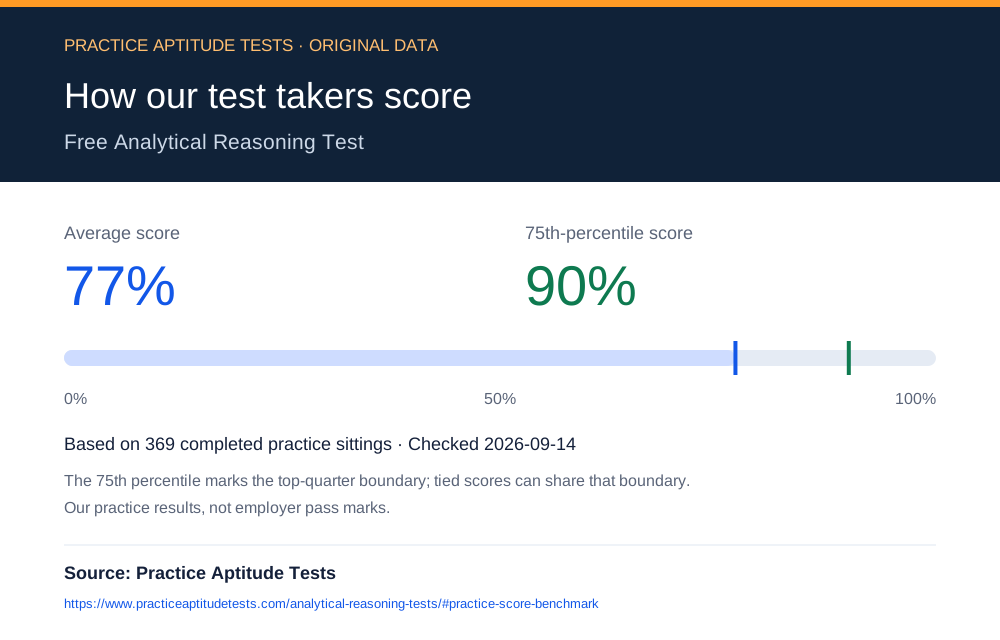
Results from our analytical reasoning test.
Source: Practice Aptitude Tests
Based on 369 completed practice sittings, all time. Checked 14 September 2026.
The 75th percentile marks the boundary of the top quarter of recorded scores; tied scores can share that boundary. These are our practice results, not employer pass marks.
We use all-time completed, scored attempts at this practice test. Repeat attempts count separately, so the sample is sittings rather than unique people.
The average is the mean score across those sittings. The 75th percentile comes from their recorded score distribution. The “checked” date is when we retrieved the figures, not the period when the tests were taken.
Sharing these figures? Please credit Practice Aptitude Tests and link to this page.
Analytical reasoning tests are common wherever a role involves untangling information and making decisions from it, which is why they appear across management, finance, engineering and data analysis, and heavily in science, technology and IT.
Most employers license their tests from a small number of publishers, and the timing and question style vary between them, so find out which publisher your employer uses before you prepare seriously. It is usually named in the invitation email. Our test publisher guides cover each format, and the employer guides cover specific companies’ processes.
The methods behind the questions above, from our team
What candidates ask us most often
No specialist knowledge is assumed, and any arithmetic in the numerical sections stays at a level most people covered at school. What is being tested is your reasoning, so the material is chosen so that everyone starts from the same place, whatever their background.
They overlap heavily and some employers use the terms interchangeably. “Analytical” tends to emphasise breaking down complex information across verbal, numerical and diagrammatic formats, while “logical” leans towards spotting rules and patterns. Practising both prepares you for either label.
In the numerical sections a basic calculator is often allowed, and many online tests provide one on screen. It matters less than people expect, because estimating first is usually faster than reaching for it. Verbal and diagrammatic sections rarely need one. Check your invitation for the rules.
Practise under the real time limit from the start, and review every answer you got wrong; untimed work builds accuracy but not the speed the test measures.
Rated 4.9 out of 5 across 184 reviews. A selection:
l liked this test. The questions were clear and relevant. i enjoyed the question challenges.The time limit was a bit tough but it helped me stay foused.Overall, it was a great learning experince.
It is very useful for improving reasoning skills. The overall questions in analytical reasoning are not difficult and at the same time the questions are challenging. The time makes me tense but it's very interesting. The exam is very useful for sharpening the brain.
I liked that the difficulty level of the questions kept steadily increasing from 1 to 10 questions. I didn't like that there were no word-based questions.
Take a free test in any format, then upgrade when you know which one you need.