
Updated
What is an SHL test?
An SHL test is an online assessment employers use to screen candidates before interview. SHL is one of the world's largest test publishers, and its assessments cover numerical, verbal, inductive and deductive reasoning, alongside behavioural and personality questionnaires. Most SHL tests are multiple choice and strictly timed, and some are adaptive, meaning the questions get harder or easier depending on your answers.
| Test types | Numerical, verbal, inductive, deductive and mechanical reasoning, situational judgement, personality |
|---|---|
| Format | Online, multiple choice; some tests adaptive |
| Typical time limit | 15 to 25 minutes, around 60 to 90 seconds per question |
| Used by | Graduate schemes and large employers across many sectors |
What you get with our SHL style aptitude tests
When you practise through Practice Aptitude Tests, you get access to SHL style assessments designed to reflect the tests used by employers in real recruitment processes.
- Realistic SHL style questions across 18 tests and 196 questions, covering numerical reasoning, verbal reasoning, inductive reasoning, deductive reasoning, mechanical comprehension, situational judgement and reading comprehension
- Multiple-choice questions reflecting the formats and difficulty levels used in SHL cognitive assessments, including the Verify range and General Ability Test (G+)
- Timed test simulations to replicate real assessment conditions, including the time pressure of 60 to 90 seconds per question
- Worked answer explanations so you can understand the reasoning steps and calculation methods behind each solution
- Performance feedback and score breakdowns to track your strengths and weaknesses across different test types and question formats
- Guidance on what to expect in SHL assessments, including the types of tests used for different roles and levels, from entry-level to graduate and managerial positions
- Preparation for the full range of SHL cognitive tests used by over 75% of FTSE 100 companies and almost half of Fortune Global 500 organisations in their hiring processes
- Unlimited practice so you can build confidence across the question types and reasoning formats that appear most frequently in SHL employer assessments
- Immediate access to SHL style practice tests, with the option to cancel at any time
The importance of practicing for SHL assessments
SHL is a globally recognised provider of psychometric testing solutions. Over 75% of FTSE 100 companies and almost half of Fortune Global 500 organisations use SHL in their hiring process to evaluate candidates’ cognitive abilities, behavioural traits, and job fit during recruitment, so it’s highly likely you’ll encounter this assessment if you’re applying for a top employer.
SHL testing is used to measure everything from numerical and verbal reasoning to personality traits and situational judgment. The type of test you face will typically be related to the job you’ve applied for and the skills needed to be successful in that role.
Each assessment ranges in difficulty and will identify your strengths and weaknesses in a variety of areas, so practicing the test format and the question types of questions you’ll be presented with boosts your chances of landing that job interview.
Key Features of SHL Assessments
- Global Accessibility: Used in over 150 countries and available in 30+ languages.
- Comprehensive Assessment Range: Includes aptitude, behavioral, and personality tests.
- Adaptive Testing Technology: Difficulty adapts in real time to candidate responses.
- Device Compatibility: Tests like SHL Verify Interactive are optimized for mobile and desktop use.
SHL general ability tests
The SHL general ability assessment combine numerical, inductive and deductive test questions. These style of questions assess your ability to problem-solve using numerical data as well as make logical reasoning decisions.
The exam comes in two different versions:
- SHL Verify Interactive (G+): 36 minutes with 24 questions
- SHL General Ability Non-Interactive: 36 minutes with 30 questions
The two main differences is that the SHL Verify Interactive exam is interactive (with drag and drop features on questions) and the questions become harder when you answer correctly and easier when you answer incorrectly (known as adaptive questioning).
SHL numerical reasoning tests
SHL numerical reasoning tests require a candidate to solve realistic numerical problems, aligned to the company’s role specifications. To pass a numerical reasoning test, you must be able to understand and work with graphical, statistical, and financial data.
Example numerical question:

What was the average absolute percentage change in the value of the USD vs the CHF from 2020 to 2022 and 2024 to 2025?
- A) 13%
- B) 15%
- C) 21%
- D) 16%
- E) 27%
Solution: Calculate the % change in the value of the USD between the two periods:
(1.60 - 1.32) ÷ 1.32 = - 21.21%
(1.54 - 1.61) ÷ 1.61 = + 4.35%
Average % change = (21.21 + 4.35) ÷ 2 = 12.78%, so the answer is A).
SHL inductive reasoning tests
Inductive reasoning questions require you to identify similarities and underlying patterns between shapes and figures. For example, you may be presented with a series of shapes and you will have to choose which image will come next, based on reasonable probability.
Example inductive question:
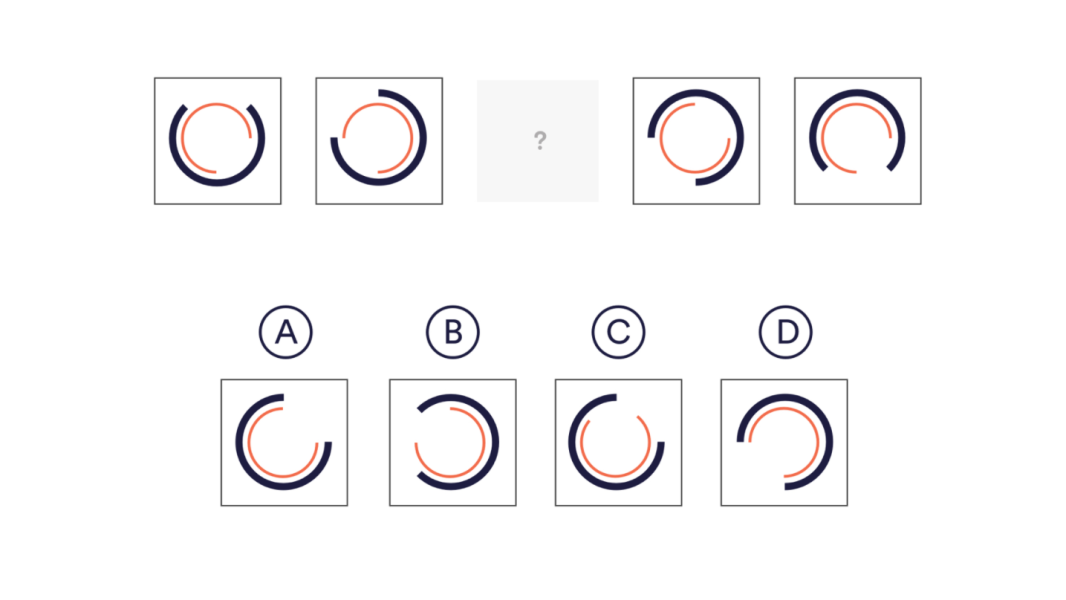
Complete the sequence:
- A
- B
- C
- D
Solution: The outer circle is turning in an anti-clockwise direction and the inner circle is rotating 90 degrees in a clockwise direction. So B) is correct.
SHL deductive reasoning tests
Deductive reasoning questions require you to complete scenarios based on incomplete information. These tests assess both your ability to choose the right answer and how quickly you do it.
Example deductive question:
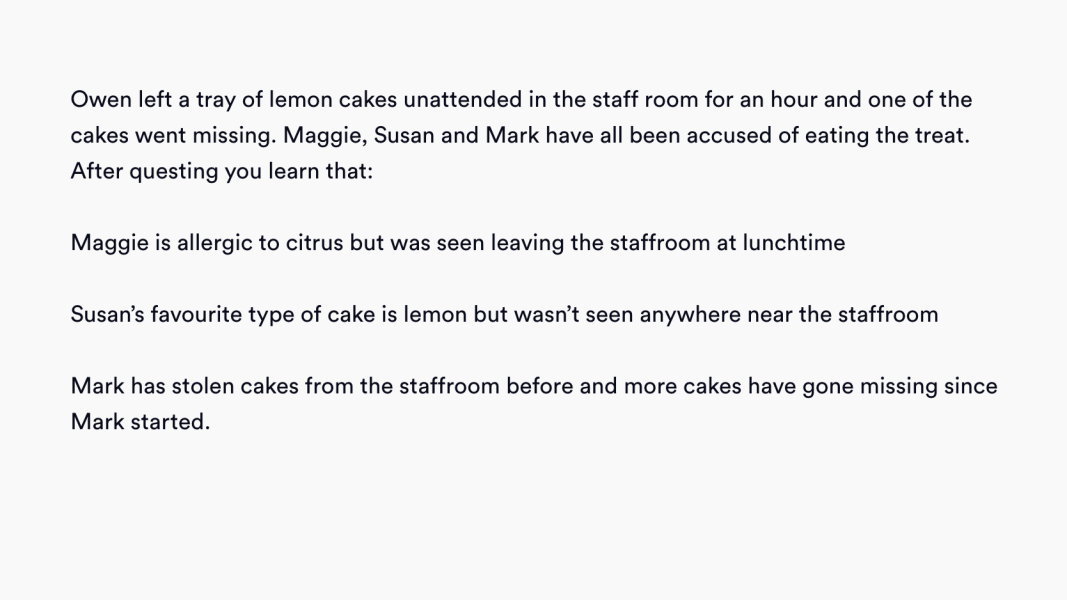
Question: Who can you infer is most likely to have taken the lemon cake?
- A) Maggie
- B) Susan
- C) Mark
Solution: Given what we have learned, it is reasonable to assume that Mark is the culprit. The facts about Maggie and Susan might help in forming a deductive argument, however, in this context they are inconsequential. Mark’s pattern of behaviour suggests he is guilty. So C) is correct.
SHL verbal reasoning tests
SHL verbal reasoning tests assess your ability to comprehend passages of text using logical deduction skills. They typically provide a candidate with written information to digest and draw conclusions from. You will have to choose an option between ‘true’, ‘false’, or ‘cannot say’, based on the text.
Example verbal question:

Statement: ‘Don’t just buy art for the sake of it’ is the message given by most antique experts.
- A) True
- B) False
- C) Cannot Tell
Solution: True – this is the “overriding advice” of “most” experts. So A) is correct.
SHL mechanical reasoning tests
You will most likely encounter mechanical reasoning tests when applying for specialised skilled jobs that require an understanding of mechanical concepts. These SHL style questions evaluate an individual’s mechanical and electronic knowledge through a series of multiple-choice answers. Be prepared to brush up on revision topics such as levers, pulleys, tools, gears, electric circuits, and more.
Example mechanical question:
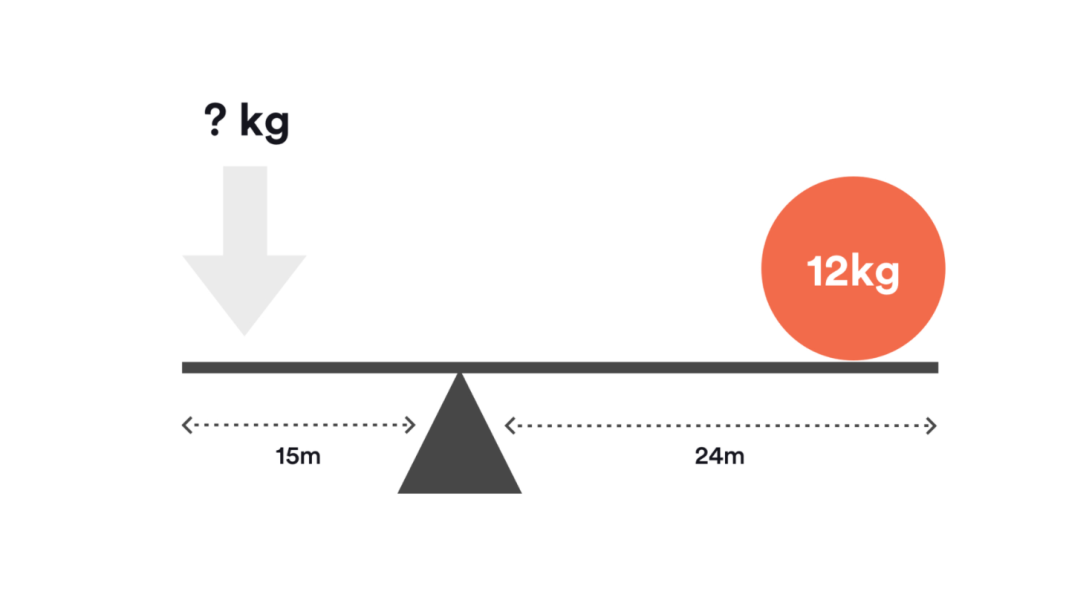
What force needs to be applied to the lever to lift the weight?
- A) 18.8kg
- B) 19.0kg
- C) 19.2kg
- D) 19.4kg
Solution: The formula to calculate the force required to lift a weight using a lever is:
w x d1 = f x d2
w = weight d1 = distance from fulcrum to weight f = force needed to lift the weight d2 = distance from the fulcrum to the point where force is applied
If we plug what we can see from the diagram into the formula we are left with the following equation:
12 x 24 = ? x 15 288 = ? x 15 288 / 15 = 19.2
So C) is correct.
SHL reading comprehension tests
Similar to verbal reasoning tests, reading comprehension tests take notice of the time it takes a candidate to read and understand a text. The test will present you with a written paragraph related to the job role you’re applying for and will ask you multiple-choice questions to determine your level of comprehension skills.
Example reading comprehension question:
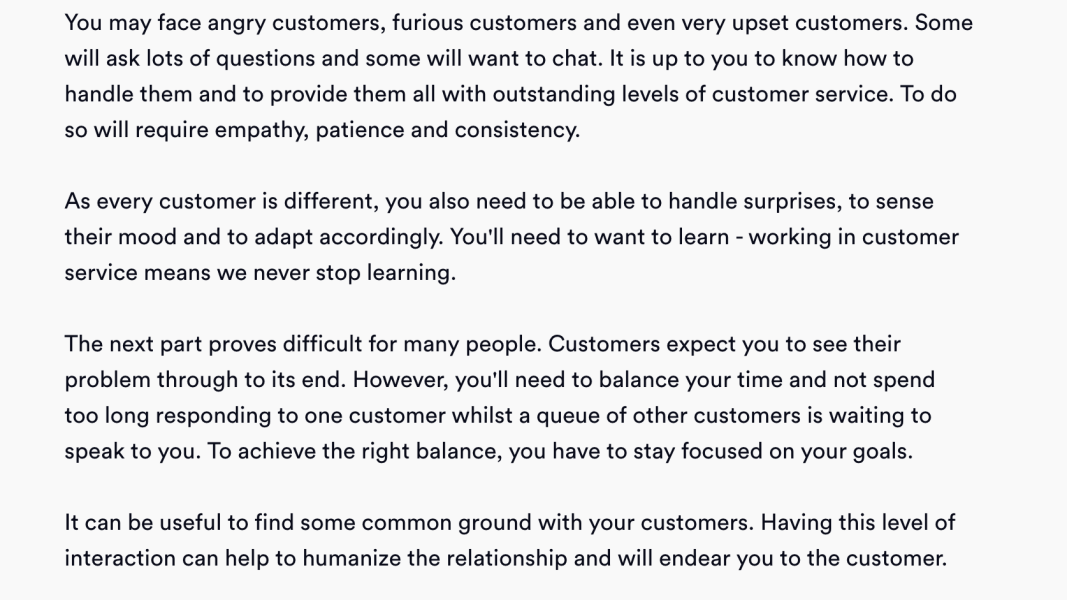
Statement: To try and get your customer to like you more, you are advised to:
- A) Ask them about their family
- B) Spend as long as you can dealing with their issue
- C) Achieve as many of your own goals as you can
- D) Find something you might have in common with them
Solution: Whilst answers A) to C) all seem fairly sensible, only answer D) is provided as an instruction in the final paragraph…’It can be useful to find some common ground with your customers. Having this level of interaction can help to humanize the relationship and will endear you to the customer.’
Being endeared to the customer means they will like you more and finding some common ground is the same as finding something you have in common with them.
SHL Verify Calculation Test
Calculation tests feature mathematical questions assessing your ability to sum, subtract, divide and multiply numbers quickly and correctly. The main difficulty is doing it promptly — learning a few tricks to solve mathematical problems faster is key to acing these tests.
Example calculation question:
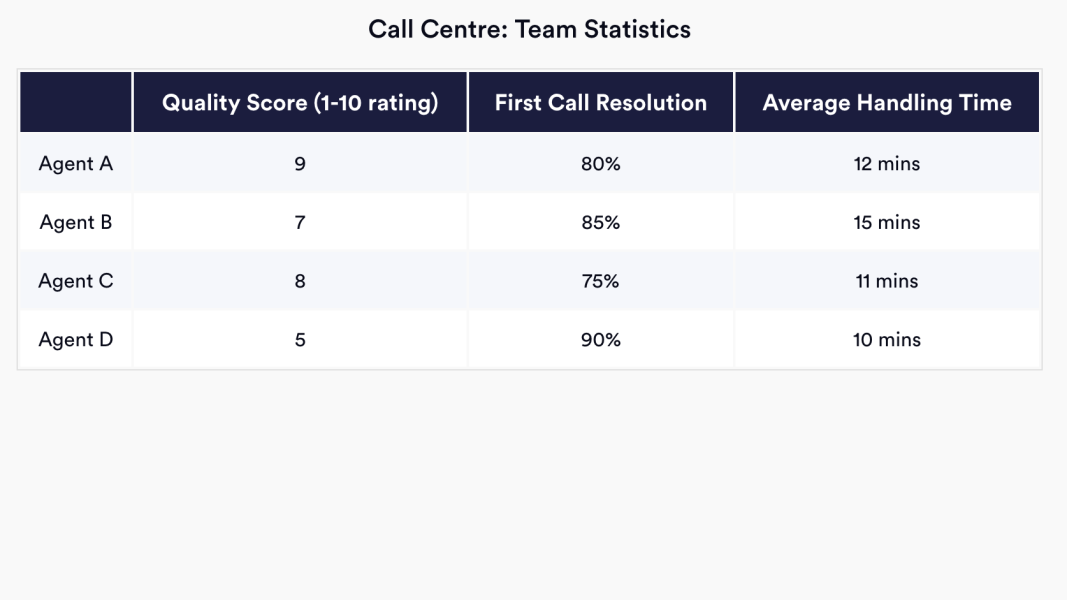
Which Agent had the highest First Call Resolution?
- A) Agent A
- B) Agent B
- C) Agent C
- D) Agent D
Solution: This question simply requires you to look across the four Agents’ First Call Resolution figures and to select the highest, which is D).
Practise SHL style tests
SHL assessments draw on the test types below. Each link takes you to free practice questions in the same format, so you can get comfortable before the real thing: