

Speed = distance ÷ time. Rearrange the same formula to find the other two values: distance = speed x time, and time = distance ÷ speed. You may see it simplified as s=d/t, where s is speed, d is distance, and t is time.
These questions come up in numerical reasoning tests and in recruitment for the armed forces and transport industries, where employers use them to test your applied mathematical abilities.
The speed, distance, time formula triangle
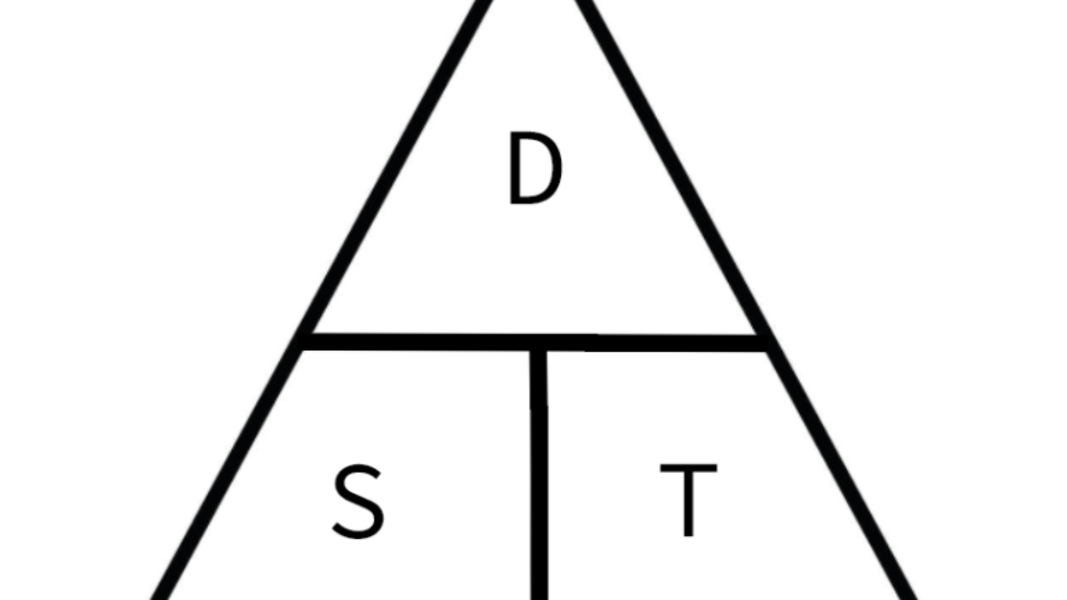
The formula triangle above is the easiest way to remember all three versions of the formula at once. Distance sits at the top, with speed and time along the base, as they are what is multiplied together to work out the distance. The triangle gives you the three formulas:
- The formula of speed is Speed = Distance ÷ Time
- The formula of time is Time = Distance ÷ Speed
- The formula of distance is Distance = Speed x Time
To use the triangle, cover up the value you want to find. The two values left visible show the calculation: side by side means multiply them together, one above the other means divide the top by the bottom.
When beginning to study for your practice test, write the triangle out on your paper. It helps you memorise the formula and saves time when working through exam questions.
How to calculate speed
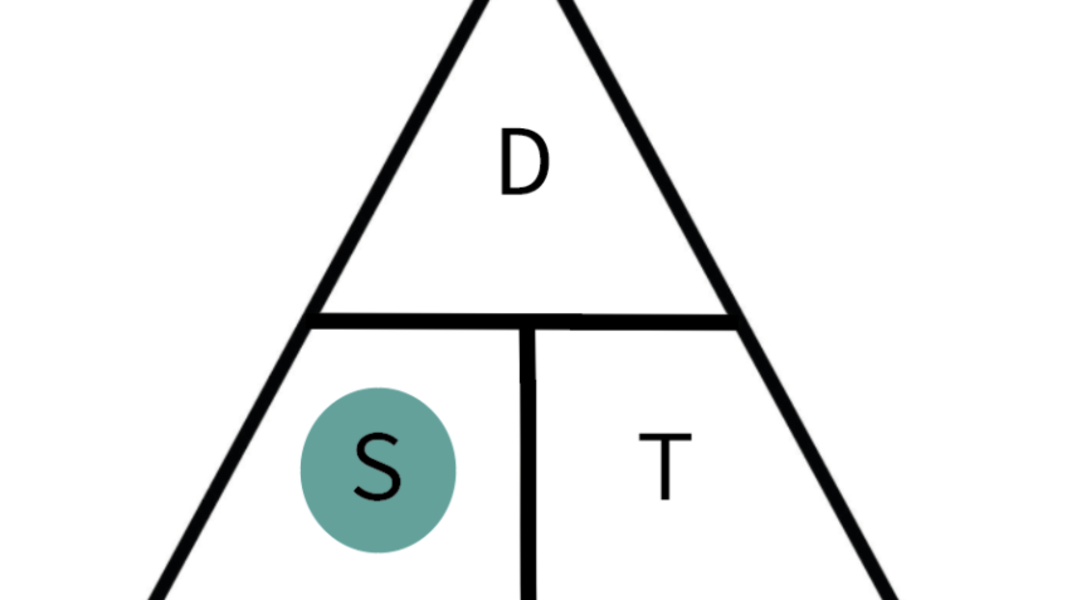
To calculate speed, divide the distance by the time. You can work this out by using the triangle: if you cover up speed, you are left with distance over time.
Here is an example:
If a driver has travelled 180 miles and it took them 3 hours to make that distance, then to work out their speed you would divide the distance by the time:
180 ÷ 3 = 60
So the driver’s speed is 60mph.
How to calculate distance

To work out the distance travelled, multiply the speed by the time. On the triangle, covering distance leaves speed and time side by side.
Here is an example:
If a driver travelled at 100mph for 4 hours, then to work out the distance you multiply the speed by the time:
100 x 4 = 400
The distance is 400 miles.
How to calculate the time
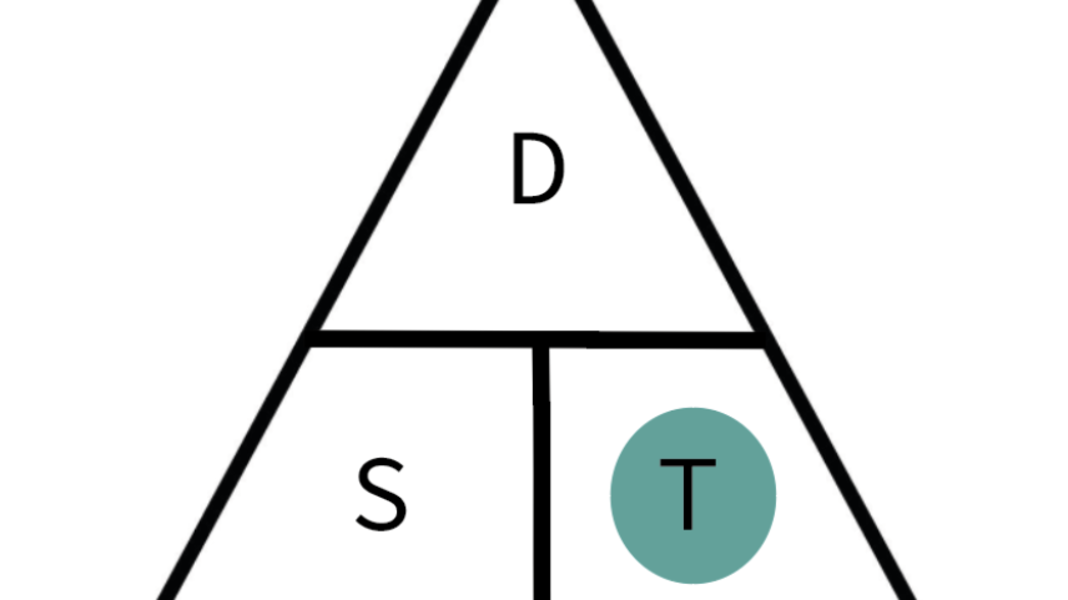
To work out the time a journey took, divide the distance travelled by the speed. Covering time on the triangle leaves distance over speed.
Here is an example:
If the driver travelled 50 miles at 5mph, then to work out the time taken you would divide the distance by the speed:
50 ÷ 5 = 10
The time taken to travel this distance is 10 hours.
Three example speed, distance, time questions
- Andy drives his lorry for 400 miles, which takes him 8 hours. Harry drives 200 miles, which takes him 4.5 hours. Who is travelling faster?
Answer: Andy’s speed is 400 ÷ 8 = 50mph. Harry’s speed is 200 ÷ 4.5 = 44.44mph. So Andy is driving faster.
- Tessa runs a 5km race with her running club every Saturday. She runs this in 40 minutes. If she maintains the same speed, how long would it take her to run an 8km race?
Answer: 40 minutes is two thirds of an hour, so her speed is 5 ÷ (40 ÷ 60) = 7.5kph. If she runs 8km at 7.5kph, to work out the time you divide 8 by 7.5, which equals 1.066 hours. Converted into hours and minutes, it will take her about 1 hour and 4 minutes to run 8km.
- Hannah goes on a cycling trip. In the first half of the journey, she travels at 10mph for 2 hours. In the second half, she travels at 20mph for 90 minutes. How far does she travel in total?
Answer: In the first half of her journey she travels 20 miles (10 x 2 = 20). In the second half, she travels 30 miles (20 x 1.5 = 30). 20 + 30 = 50, so she travels 50 miles in total.
Methods to get better at these questions
To improve your skill in answering speed, distance, time questions, there are two main things you can do.
First, make sure you know the formula triangle inside out, so you always know which equation to use, whether the question asks for speed, distance or time. Watch the units too: if time is given in minutes, convert it to a fraction of an hour before you divide.
Secondly, focus on improving your general mathematical skills. You may get a compound question, which asks you to use the formula in conjunction with percentages, averages or unit conversions.
You can practise both with our basic numeracy tests and free aptitude tests, which will help you build the fundamentals before tackling full exam-style questions.