Abstract Reasoning Test
Shape sequences, matrices, pattern completion and odd-one-out, in the formats employers actually set. Every question comes with the rule explained, not just the answer.
- 10 questions
- 10 minutes
- Worked solutions
- Printable PDF
Free · No sign-up · Scored the moment you finish






What is an abstract reasoning test?
An abstract reasoning test measures how well you identify patterns and relationships between shapes, with no words or numbers involved. Employers use it as a culture-fair measure of reasoning before interview. You are shown a sequence or set of figures and asked to work out the underlying rule, then pick the shape that comes next or completes the pattern. It rewards spotting the rule quickly and applying it accurately.
Free abstract reasoning test
Start the free test. It opens full screen, without leaving this page.
Prefer paper?
Download this test as a PDF or a second practice paper with different questions.
Worked solutions included. No sign-up.
Free Abstract Reasoning Test
-
Question 1 of 10
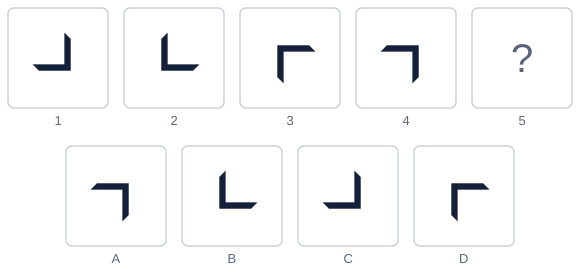
Which shape comes next in the sequence?
- Figure A
- Figure B
- Figure C
- Figure D
Show the answer
Answer: C. Figure C
The answer is C. Each chevron turns 90° clockwise from the one before it. Continuing the turn gives the chevron at 45°. Figure A repeats the last shape without applying the final turn. Figure B over-rotates by one extra 90° step. Figure D turns back the way the sequence came instead of continuing.
-
Question 2 of 10
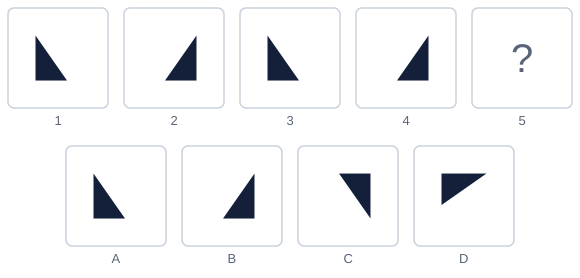
Which shape comes next in the sequence?
- Figure A
- Figure B
- Figure C
- Figure D
Show the answer
Answer: A. Figure A
The answer is A. The triangle is flipped left-to-right at each step, so the orientation alternates. After the fourth shape (flipped) the sequence returns to the original, right angle at the bottom-left. Figure B keeps the flipped orientation instead of alternating back. Figure C rotates the triangle 180° rather than reflecting it. Figure D rotates the triangle 90° clockwise rather than reflecting it.
-
Question 3 of 10
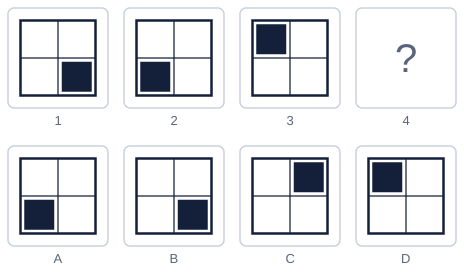
Which shape comes next in the sequence?
- Figure A
- Figure B
- Figure C
- Figure D
Show the answer
Answer: C. Figure C
The answer is C. The shaded cell moves one position clockwise around the grid at each step. The next clockwise position is the top-right cell. Figure A moves the marker anticlockwise, the wrong way round. Figure B skips a cell, moving two positions clockwise instead of one. Figure D leaves the marker where it was, ignoring the move.
-
Question 4 of 10
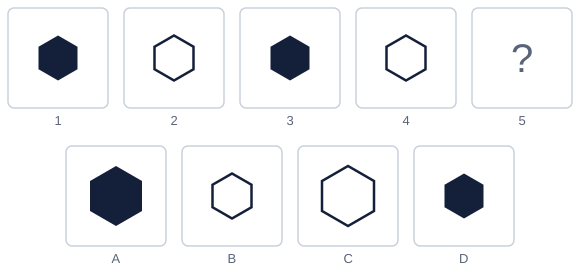
Which shape comes next in the sequence?
- Figure A
- Figure B
- Figure C
- Figure D
Show the answer
Answer: D. Figure D
The answer is D. The hexagon alternates between shaded and unshaded at each step. The fourth shape is unshaded, so the next one is shaded again. Figure A shades the shape correctly but enlarges it, though the size never changes. Figure B leaves the shape unshaded instead of toggling the fill back to shaded. Figure C both fails to shade the shape and enlarges it.
-
Question 5 of 10
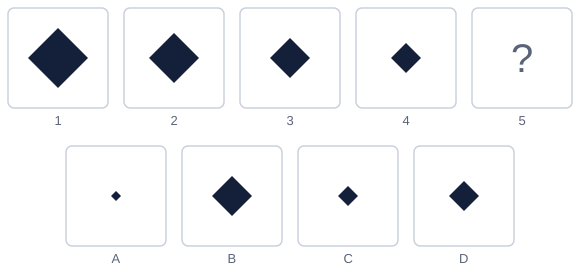
Which shape comes next in the sequence?
- Figure A
- Figure B
- Figure C
- Figure D
Show the answer
Answer: C. Figure C
The answer is C. The diamond changes size by the same amount each step, getting smaller. The next diamond continues the progression to width 16. Figure A changes size by two steps instead of one. Figure B changes size in the wrong direction. Figure D repeats the previous size instead of changing it again.
-
Question 6 of 10
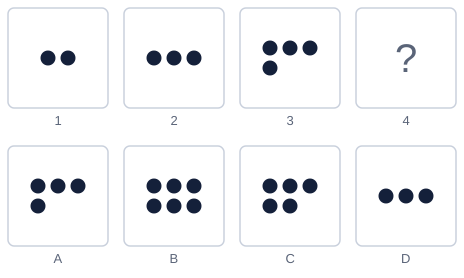
Which shape comes next in the sequence?
- Figure A
- Figure B
- Figure C
- Figure D
Show the answer
Answer: C. Figure C
The answer is C. The number of circles increases by 1 at each step. The next group therefore has 5 circles. Figure A repeats the previous count without adding any more. Figure B adds two steps instead of one. Figure D reduces the count instead of increasing it.
-
Question 7 of 10
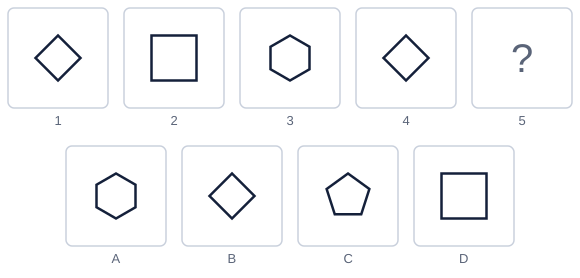
Which shape comes next in the sequence?
- Figure A
- Figure B
- Figure C
- Figure D
Show the answer
Answer: D. Figure D
The answer is D. The shapes repeat in a fixed three-step cycle: diamond, then square, then hexagon. After the cycle restarts with the diamond, the next shape is the square. Figure A jumps to the third shape in the cycle, skipping one. Figure B repeats the shape just shown rather than advancing the cycle. Figure C introduces a pentagon, a shape the cycle never uses.
-
Question 8 of 10
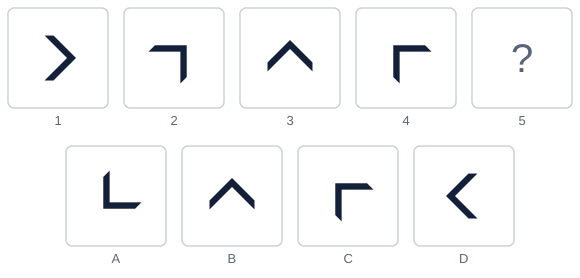
Which shape comes next in the sequence?
- Figure A
- Figure B
- Figure C
- Figure D
Show the answer
Answer: D. Figure D
The answer is D. Each chevron turns 45° anticlockwise from the one before it. Continuing the turn gives the chevron at 180°. Figure A over-rotates by one extra 45° step. Figure B turns back the way the sequence came instead of continuing. Figure C repeats the last shape without applying the final turn.
-
Question 9 of 10
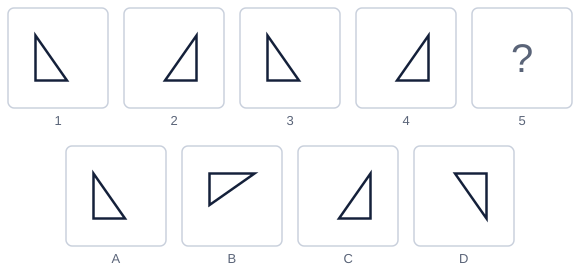
Which shape comes next in the sequence?
- Figure A
- Figure B
- Figure C
- Figure D
Show the answer
Answer: A. Figure A
The answer is A. The triangle is flipped left-to-right at each step, so the orientation alternates. After the fourth shape (flipped) the sequence returns to the original, right angle at the bottom-left. Figure B rotates the triangle 90° clockwise rather than reflecting it. Figure C keeps the flipped orientation instead of alternating back. Figure D rotates the triangle 180° rather than reflecting it.
-
Question 10 of 10
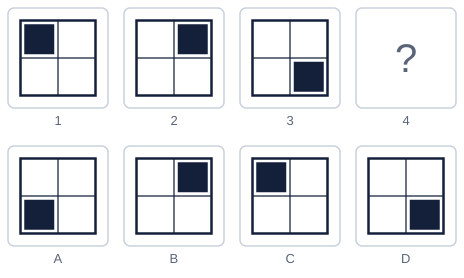
Which shape comes next in the sequence?
- Figure A
- Figure B
- Figure C
- Figure D
Show the answer
Answer: A. Figure A
The answer is A. The shaded cell moves one position clockwise around the grid at each step. The next clockwise position is the bottom-left cell. Figure B moves the marker anticlockwise, the wrong way round. Figure C skips a cell, moving two positions clockwise instead of one. Figure D leaves the marker where it was, ignoring the move.
How to interpret your score
| Score | What it suggests |
|---|---|
| 9 to 10 | Comfortably above the bar for most graduate schemes |
| 7 to 8 | Around the typical pass mark. Worth practising for speed |
| 5 to 6 | Below most employer thresholds. Focus on method before speed |
| 4 or fewer | Work through the worked solutions above before retrying |
Employers set their own thresholds and many sift on the top percentage of applicants rather than a fixed mark, so treat these as a guide.
Practise with the full pack
One test tells you the style. A pack gives you the pace: batches under time pressure, marked, with the working shown.
- 11
- Abstract Reasoning tests
- 110
- questions, all solved
Types of abstract reasoning question
Most questions are one of a few formats built from the same short list of transformation rules. Each guide below covers one.
Shape sequences
Find the rule that moves the sequence on a frame. Work one element at a time; a chaotic frame is two or three simple rules running at once.
How to spot the ruleMatrix questions
Complete the grid. Read along the rows and down the columns separately: the rule usually works in one direction.
How matrix questions workTransformation rules
Rotation, reflection, size, count, shading and position. Learn the short list and questions become recognition, not guesswork.
Learn the transformation rulesHow are abstract reasoning tests scored?
Most employers score you against other candidates, not against a fixed pass mark: your raw score becomes a percentile. Attempting questions matters, because most tests are built so few candidates finish, and guessing usually pays: negative marking is rare, but check the instructions.
Practice Aptitude Tests · Original data
How our test takers score
Results from every test in our Abstract Reasoning pack, past and present.
Key finding60% of Abstract Reasoning test takers score 80% or more.
How scores spread
60% scored 80% or more, and 8% scored under 40%.
Share of sittings in each score band.
Practice pays
Regular practisers went from 80% on their first test to 83% on their fifth.
6,527 people who took five or more tests.
Does speed help?
Speed makes little difference here.
Typical pace: 38 seconds a question.
Share this data
Video tutorials
The methods behind the questions above, from our team